Direct-from-factory production lines offering customizable firmware, private label tooling, low MOQs, and comprehensive compliance certifications.
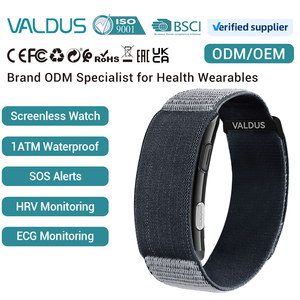
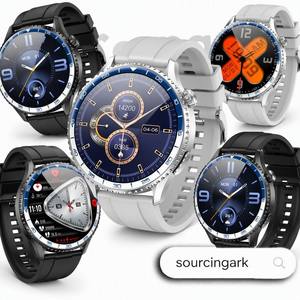
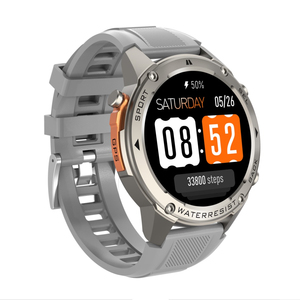
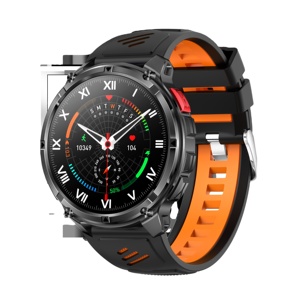
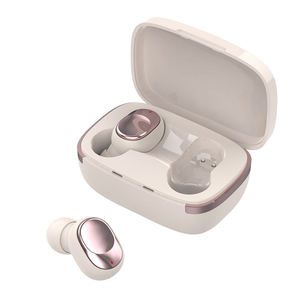
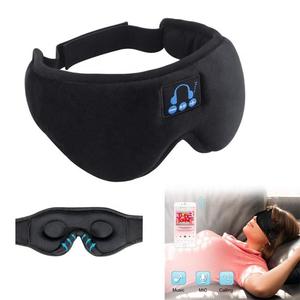
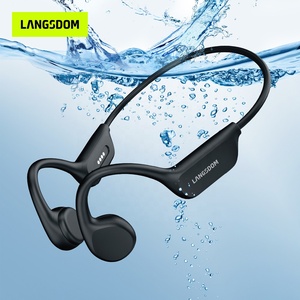
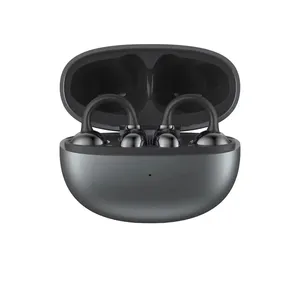
The global True Wireless Stereo (TWS) earphones and smart wearables market has transitioned from basic Bluetooth connectivity to complex multi-sensor electroacoustic platforms. For brand owners, procurement officers, and enterprise distributors, identifying an authorized, technically competent OEM/ODM TWS earbuds factory and supplier is no longer merely about cost-per-unit negotiation. Modern sourcing strategies demand a granular evaluation of a supplier’s acoustic tuning capabilities, Surface Mount Technology (SMT) precision, system-on-chip (SoC) integration expertise, and strict adherence to international regulatory frameworks.
Today’s end-users demand hybrid Active Noise Cancellation (ANC), Environmental Noise Cancellation (ENC) powered by artificial intelligence algorithms, spatial audio rendering, IPX7 to IPX8 water ingress protection, and comprehensive biometrics tracking. Meeting these consumer expectations at competitive wholesale margins requires direct manufacturer collaboration. This technical guide outlines market trajectories, engineering standards, strategic procurement frameworks, and factory evaluation methodologies necessary to establish a resilient, high-yield audio hardware supply chain.
Enterprise procurement data reveals that over 68% of TWS warranty claims originate from two root causes: micro-component corrosion due to inadequate acoustic mesh sealing and Bluetooth desynchronization under high RF interference. Tier-1 OEM/ODM suppliers now mitigate these risks through automated hydrophobic nano-coating application and dual-antenna RF chamber calibration prior to final housing assembly.
Understanding emerging electroacoustic and wearable technology trends is critical for brand managers planning product roadmaps 18 to 24 months in advance. The convergence of consumer audio and personal health monitoring is creating entirely new product sub-categories.
Traditional single-mic CVC noise reduction is being rapidly replaced by dual and quad-microphone arrays utilizing Deep Neural Network (DNN) voice isolation. OEM factories are integrating DSP-level algorithms that sample ambient noise at up to 48kHz, effectively suppressing wind, mechanical, and crowd background chatter down to -45dB without introducing robotic audio artifacts.
Next-generation TWS contract manufacturing heavily emphasizes Bluetooth 5.4 architecture incorporating Low Energy (LE) Audio and the Low Complexity Communication Codec (LC3). Replacing classic SBC, LC3 provides superior acoustic fidelity at half the bit-rate, drastically reducing power consumption and expanding total playback battery life per charge cycle by up to 35%.
Driven by sports safety awareness and extended wear comfort, non-in-ear form factors (OWS - Open Wearable Stereo) are experiencing exponential B2B order growth. Leading ODM suppliers utilize directional sound field transfer technology to minimize acoustic leakage while preserving bass response via specialized dynamic vibration transducers.
Sourcing TWS earbuds and smart fitness bands requires balancing unit production cost against long-term brand equity. Key procurement trends shaping enterprise buyer behavior include:
When evaluating factory quotes, technical specifications must be audited against standardized test conditions. Below is a comparative blueprint illustrating typical engineering parameters across key OEM wearable tiers:
| Performance Category | Entry-Level TWS / Smart Band | Mid-Tier ANC / BT Call Watch | Flagship Audiophile / Health Wearable |
|---|---|---|---|
| Target Chipset Platform | JL / Realtek Solution | Airoha / Actions / BES Architecture | Qualcomm QCC Series / Nordic Semi |
| Acoustic Driver Type | 6mm - 10mm Dynamic PET Membrane | 10mm - 13mm Titanium/PU Composite | Balanced Armature + Dual Dynamic Hybrid |
| Active Noise Cancellation | Software ENC (Call Only) | Feedforward ANC (-25dB to -30dB) | Hybrid Adaptive ANC (-40dB to -48dB) |
| Battery & Charging Cycle | 30mAh / 300mAh Case (20h Total) | 40mAh / 500mAh Case (30h Total) | 50mAh / 800mAh Fast/Wireless Charging |
| Ingress Protection Rating | IPX4 (Sweat Resistant) | IPX5 to IPX7 Waterproof | IPX8 / 5ATM Swimming Waterproof |
| Biometrics & Sensors | Basic PPG Heart Rate | 24/7 HR, SpO2, Sleep Tracking | ECG Medical-Grade, Temp, Multi-GPS |
Partnering directly with a established OEM/ODM TWS earbuds manufacturer eliminates intermediary distributor markups while securing total engineering control over product quality. As featured in leading tech reviews and industry audits (including recognition across top consumer technology publications such as CNET, Forbes, Digital Trends, Wirecutter, and ZDNet), top-tier electroacoustic suppliers provide end-to-end manufacturing infrastructure:
Every audio product undergoes automated frequency response curve calibration utilizing SoundCheck software and B&K artificial ear simulators, guaranteeing precise adherence to target response curves (such as SonicMax acoustic profile standards).
High-precision High-Speed Surface Mount Technology lines eliminate manual soldering defects on ultra-dense Bluetooth mainboards, reducing factory Defective Parts Per Million (DPPM) down to industry-leading levels (<50 DPPM).
From positive/negative vacuum pressure air-tightness testing (ensuring IPX7/IPX8 structural sealing) to thermal shock (-40°C to +70°C) and salt-spray corrosion chamber runs, factory products undergo rigorous reliability verification.
Expert answers addressing technical procurement queries, factory auditing standards, and OEM customization procedures.
Request our comprehensive 2026 OEM/ODM TWS Earbuds & Smartwear Product Catalog. Access detailed line cards, wholesale price tiers, and custom tooling schedules.