
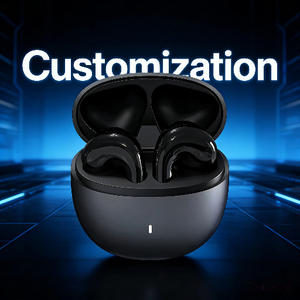
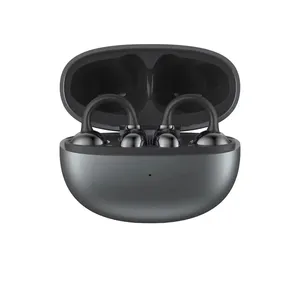
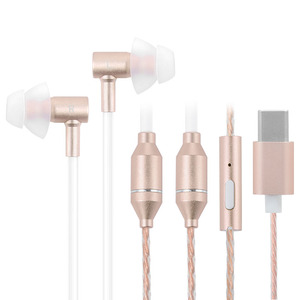
Custom OEM Dual Mic Earbuds Supplier: Structural Acoustics & B2B Procurement Excellence
An authoritative technical evaluation of dual-microphone spatial beamforming, neural network environmental noise cancellation (ENC), and contract manufacturing paradigms for true wireless stereo (TWS) audio brands.
1. Executive Summary & Market Intent Mining
In the rapidly evolving global personal audio sector, enterprise buyers, regional distributors, and consumer electronics brands face shifting consumer demands. Single-microphone voice acquisition is no longer competitive in mid-tier to flagship true wireless stereo (TWS) products. Modern end-users demand pristine voice intelligibility during remote calls, urban commutes, and outdoor activities. This technical whitepaper establishes the engineering criteria, acoustic architecture, and manufacturing standards required when selecting a specialized custom OEM dual mic earbuds supplier.
By leveraging differential dual-microphone beamforming arrays combined with Hardware Digital Signal Processors (DSP) running Environmental Noise Cancellation (ENC) and Qualcomm cVc 8.0 software stacks, premier manufacturing partners achieve up to 35dB of ambient noise attenuation. This document provides global procurement directors, hardware product managers, and brand strategists with actionable technical insights, regulatory compliance roadmaps, and factory audit benchmarks necessary for scalable B2B sourcing.
Dual-Microphone Spatial Beamforming Architecture
Understanding the physics of differential speech pickup, MEMS sensor selection, and signal-to-noise ratio optimization in OEM earbuds.
Digital MEMS Sensors
Deployment of high-SNR (-38dBV/Pa sensitivity, 64dB+ SNR) silicon MEMS microphones from Knowles and InvenSense, ensuring ultra-low phase mismatch across operational temperature ranges.
Spatial Beamforming
Talk-mic and environment-mic array configuration utilizing delay-and-sum algorithm calculation to project an accurate acoustic pickup cone directly focused on the user's vocal tract.
Acoustic Duct Isolation
Physically separated microphone cavities combined with anti-wind noise mesh tunnels designed to mechanically baffle airflow and prevent turbulence up to 25 km/h wind speeds.
Future Sourcing & Technology Trends (2026–2030 Roadmap)
Anticipating the technological inflections shaping next-generation personal audio manufacturing to protect OEM product development investments.
1. Neural Network AI-ENC Integration
Traditional fixed-coefficient DSP algorithms are giving way to Deep Neural Network (DNN) noise suppression running on edge NPU chips (e.g., Airoha AB1562, Qualcomm QCC3056, Bestechnic BES2500). Future OEM dual mic designs utilize real-time trained AI voice extraction models capable of isolating human voice from dynamic, non-stationary background noise such as crying infants, keyboard clatter, and industrial machinery.
2. Bluetooth LE Audio & LC3 Codec Standardization
Bluetooth 5.4 and LE Audio are redefining power consumption metrics and wireless audio bandwidth. Transitioning from legacy SBC/AAC codecs to the Low Complexity Communication Codec (LC3) enables sub-20ms audio latency and 50% lower power drain. OEM suppliers capable of integrating LC3 codec support with dual-microphone call processing will capture dominant market share in corporate headset and low-latency gaming verticals.
3. Hybrid ANC + Dual Mic ENC Convergence
Market segmentation between Active Noise Cancellation (ANC for listening) and Environmental Noise Cancellation (ENC for calling) is blurring. Premium ODM platforms now incorporate 4-mic or 6-mic arrays per pair—combining feedforward/feedback ANC microphones with spatial call pick-up algorithms, establishing a single unified acoustic engine across all operational modes.
4. Sustainable ESG Sourcing & Modular Battery Design
European and North American regulatory mandates require strict adherence to eco-design directive standards. OEM factories are pivoting toward post-consumer recycled (PCR) plastics, mercury-free button cell lithium batteries, solderless micro-connectors, and zero-plastic retail-ready packaging solutions to reduce carbon footprints throughout the supply chain.
OEM TWS Technical Architecture Matrix
A spec-by-spec comparison matrix for procurement teams evaluating custom OEM dual mic earphone tiers.
| Performance Tier | Microphone Configuration | DSP & Algorithm Engine | Noise Reduction Index | Target Retail Application |
|---|---|---|---|---|
| Entry Commercial OEM | Single MEMS + ECM Analog | Standard SBC Realtek / JL Chipset | 12dB – 15dB Suppression | Budget Promotional / Entry Retail |
| Professional Dual Mic ENC | Dual Digital MEMS (Matched Phase) | Qualcomm cVc 8.0 / Airoha Smart ENC | 28dB – 32dB Suppression | Business Commute, Remote Work, Fitness |
| Flagship Hybrid ANC + ENC | Quad-Mic Array (2 FF + 2 FB/Talk) | BES / Airoha High-End DSP + NPU | 35dB – 42dB Hybrid Cancellation | Premium Audiophile & Executive Headsets |
| Open-Ear Sport Dual Mic | Dual Beamforming + Directional Cavity | Custom DSP Wind Noise Cancelling | 25dB Airflow Noise Attenuation | Outdoor Running, Cycling, Sports Wear |
Factory Operations, QA Standards & OEM Customization Scope
Why leading global consumer electronics brands select our manufacturing facility as their trusted TWS contract manufacturer.
Precision SMT & Assembly Lines
Our ISO9001 and BSCI certified facilities feature high-speed Panasonic SMT placement lines capable of 0201 component mounting, ensuring minimal parasitic interference in dense TWS RF board layouts.
Anechoic Acoustic Testing
Every production batch undergoes 100% automated acoustic testing using Audio Precision APx555 analyzers and SoundCheck systems inside fully shielded anechoic chambers to guarantee THD < 1% and precise frequency response tracking.
Comprehensive Reliability QA
Rigorous environmental testing protocols including IPX5/IPX7 waterproof chamber immersion, 1.5m drop tests, salt spray corrosion testing, button tactile life testing (100,000+ cycles), and thermal shock storage (-40°C to +70°C).
End-to-End OEM/ODM Turnkey Customization Options
We provide global B2B clients with comprehensive customization flexibility across all production stages:
- Industrial Design (ID) & Mechanical Engineering (MD): Custom earbud form factors, ergonomic stem designs, compact charging case tooling, and private mold exclusivity.
- Acoustic Tuning & EQ Profiling: Custom dynamic driver choices (6mm to 13mm Graphene, Titanium, or Composite Diaphragms) tuned to specific target audio curves (Harmon Target, Deep Bass Boost, Studio Flat).
- Firmware & Software Development: Bespoke Bluetooth pairing names, custom LED illumination patterns, localized voice prompts in 15+ languages, touch control mapping, and iOS/Android companion app integration.
- Branding & Packaging Compliance: Laser-engraved logo application, custom color matching (Pantone/CMYK finishes), silk-screen printing, and sustainable packaging compliant with CE, FCC, RoHS, REACH, and WEEE regulations.
Step-by-Step OEM Manufacturing Workflow
A transparent, structured development methodology from initial design concept to final bulk shipping.
Step 1: Technical Requirement Briefing
Alignment on chipset preference (Qualcomm, Airoha, Realtek), microphone specifications, battery target hours, target price point, and market certification needs.
Step 2: Prototyping & Sample Sign-Off
Rapid 3D modeling, SLA mockup verification, Golden Sample acoustic tuning, and initial mock firmware testing within 7 to 14 working days.
Step 3: Tooling & Pilot Production (EVT/DVT)
Precision steel mold injection, Engineering Validation Test (EVT), and Design Validation Test (DVT) runs to optimize yield rates and mechanical tolerance fit.
Step 4: Mass Production & Global Logistics
Full-scale production under strict AQL 1.0/2.5 inspection standards, combined with drop-shipping or FOB/CIF shipping to designated global warehouses.
OEM Dual Mic Earbuds Procurement FAQ
Direct technical and commercial answers to common questions raised by business buyers and supply chain managers.