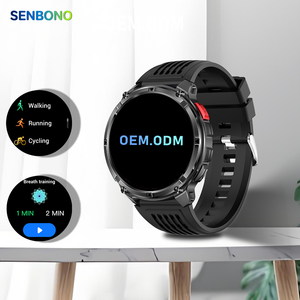
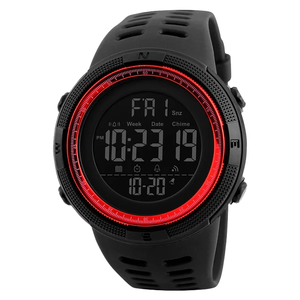
Direct OEM/ODM Solutions for Global Wholesalers, Distributors, and Brands
In the post-pandemic digital health era, pulse oximetry integrated into wearable wrist devices has evolved from a niche fitness novelty into an essential non-invasive diagnostic metric. Peripheral Capillary Oxygen Saturation (SpO2) monitoring—alongside continuous Heart Rate Variability (HRV), Electrocardiography (ECG), and Sleep Apnea screening—serves as the cornerstone for modern telehealth, remote patient monitoring (RPM), and commercial health fitness wearables.
China remains the undisputed global hub for smart wearable manufacturing, accounting for over 85% of total blood oxygen smartwatch production. For enterprise B2B buyers, brand owners, cross-border e-commerce sellers, and medical device distributors, navigating the landscape of China wholesale blood oxygen watch factories and suppliers requires a granular understanding of sensor physics, algorithm accuracy, hardware sourcing, regulatory certifications (FDA 510(k), CE MDR), and factory OEM/ODM capabilities.
Leading Chinese OEM factories employ reflective Photoplethysmography (PPG) utilizing both Red (approx. 660 nm) and Infrared (approx. 940 nm) LEDs combined with high-sensitivity photodiode arrays to measure oxygenated vs. deoxygenated hemoglobin ratios.
Integrations with top-tier AFE (Analog Front End) chips such as Goodix (GH3011), Silicon Labs (Si1182), or VC9201 allow real-time filtering of skin pigmentation variability, low perfusion, and physical movement noise.
Tier-1 Shenzhen and Dongguan factories feature Class 100,000 dust-free cleanroom manufacturing lines, strictly adhering to medical device quality management standards for optical lens bonding and acoustic sealing.
As the global market transitions toward preventative healthcare, B2B procurement strategies are shifting dramatically. Buying teams must align their sourcing roadmaps with five critical technology and market dynamics:
Legacy wearables only measured SpO2 on-demand via manual triggers. 2025+ procurement specifications require continuous background monitoring during sleep cycles (22:00 to 08:00). Firmware algorithms auto-detect Oxygen Desaturation Index (ODI) drops below 90%, alerting users to potential Obstructive Sleep Apnea (OSA) events.
Standalone SpO2 monitors are fast being superseded by integrated multi-parameter health watches. Premium factories now offer unified optical-ecg sensors (e.g., PPG+ECG integrated sensors) that deliver simultaneous readings for Arterial Stiffness, HR, SpO2, Stress Index (via HRV), and Skin Temperature within a single 30-second test window.
Institutional buyers—including insurance companies, hospital systems, and corporate wellness platforms—no longer accept closed ecosystem apps. Suppliers providing customizable iOS/Android SDKs, Bluetooth Low Energy (BLE) protocol documentation, and cloud API webhooks are capturing the highest margin B2B contracts.
Continuous optical LED firing consumes substantial power. Factories utilizing advanced MCU architectures (such as Realtek RTL8763E, Nordic nRF5340, or Dialog DA1469x series) combined with dynamic sampling rate adjustments can achieve 7 to 14 days of continuous operation with overnight SpO2 tracking enabled on 300mAh–1100mAh Li-polymer batteries.
With tightening environmental regulations (EU REACH, RoHS 3.0) and skin allergy concerns (ISO 10993 biocompatibility), tier-1 suppliers are switching to medical-grade liquid silicone straps, hypoallergenic ceramic bottom casings, and nickel-free charging contact pins.
When selecting a manufacturing partner in China, understanding the technical specifications across product tiers is vital for portfolio positioning:
| Technical Parameter | Basic Consumer Tier | Mid-Range Sports Tier | Clinical / RPM Tier |
|---|---|---|---|
| PPG Sensor Architecture | Single Green LED + Photodiode | Dual Red + IR + Green LED Array | Multi-Channel Red/IR Dual Sensor Array |
| SpO2 Measurement Mode | Spot-check (Manual trigger) | Interval Spot-check + Sleep Tracking | Continuous 24/7 Real-Time Sampling |
| Measurement Accuracy Range | ±3% to 5% (Static conditions) | ±2% (ISO 80601-2-61 aligned) | ±1.5% (Medical Grade Certified) |
| Main Chipset / MCU | Jerry (JL) / Huntersun | Realtek / Goodix / JL Dual-Core | Nordic nRF / STMicroelectronics |
| Perfusion Index (PI) Range | > 0.3% required | > 0.1% low perfusion operational | > 0.07% high-sensitivity optical sensor |
| Target Wholesale FOB Price | $7.50 – $14.00 USD | $15.00 – $28.00 USD | $32.00 – $65.00 USD |
| Primary Certifications | CE, RoHS, FCC | CE, RoHS, FCC, REACH | ISO 13485, CE MDR Class IIa, FDA 510(k) |
Navigating direct factory sourcing in China requires a partner with proven hardware engineering, software development, and quality assurance capabilities. Our integrated supply chain infrastructure delivers distinct operational advantages for international business buyers:
From initial industrial design (ID) rendering and mechanical engineering (MD) to private-label silk-screen branding, custom packaging, and customized UI/UX themes, we provide comprehensive turn-key manufacturing.
Our dedicated software engineering team provides fully localized mobile apps (FitCloudPro, DaFit, or proprietary custom apps) with localized server nodes (AWS/Google Cloud) compliant with GDPR and HIPAA data privacy rules.
Every blood oxygen watch undergoes 100% optical sensor spectrum calibration, water resistance pressure testing (IP67/IP68/5ATM), 48-hour high-temperature burn-in, and drop/vibration stress testing prior to shipment.
Reputable manufacturers utilize automated Optical Pulse Oximeter Simulators (such as FLUKE Index 2 series) during assembly. The watch's sensor is placed against a simulated optical finger phantom that replicates human arterial pulsations across varying light absorption rates. Firmware calibration parameters are flashed directly into the MCU to ensure reading deviation remains within ±2% SpO2 across 70% to 100% oxygen saturation ranges.
Standard OEM MOQ for laser engraving or silk-screen logos on existing housing models typically starts at 500 to 1,000 units. Custom branded retail packaging and customized startup screen boot animations usually require an MOQ of 1,000 to 2,000 units. Full ODM customized tooling (new mold development) requires an initial baseline commitment of 5,000 to 10,000 units.
For standard consumer wellness smartwatches: European markets require CE-EMC, CE-LVD, RED directive compliance, and RoHS/REACH material testing; North America requires FCC ID certification and California Prop 65 compliance. If marketed specifically as a medical diagnostic device, FDA 510(k) clearance (USA) or CE MDR Class IIa certification (Europe) alongside ISO 13485 facility compliance is required.
Melanin in darker skin absorbs green and red light wavelengths more heavily, which can degrade the Optical Signal-to-Noise Ratio (SNR). Modern factories resolve this by implementing Multi-Spectrum Adaptive LED Current Regulation. The algorithm automatically increases optical driver currents and switches dynamically to Infrared channels when low PPG waveform amplitude is detected, guaranteeing consistent SpO2 accuracy across all skin phototypes (Fitzpatrick scale I–VI).
Yes. We provide native iOS (Objective-C/Swift) and Android (Java/Kotlin) SDKs along with comprehensive Bluetooth API documentation. This enables enterprise software developers to pull raw real-time PPG data, SpO2 logs, step counts, and sleep metrics directly into third-party EHR (Electronic Health Records) systems or wellness portals.
For neutral in-stock inventory shipped without branding, lead times range from 3 to 7 business days. Standard OEM customized production orders (branded housings, software customization, custom boxes) require 25 to 35 calendar days following pre-production sample approval. Complex ODM projects involving new tooling typically require 60 to 90 days total cycle time.
Watches designed for sport and health tracking feature structural IP67, IP68, or 5ATM ratings. Waterproof testing involves 100% vacuum air-leakage chamber tests on raw casings, followed by high-pressure hydrostatic chamber testing on assembled units to ensure long-term resistance against sweat, rain, swimming, and daily submersions.
Standard B2B payment terms are 30% T/T deposit upon order confirmation and 70% balance paid prior to shipment following pre-shipment inspection (PSI). We provide a 12 to 24 month factory warranty covering manufacturing defects, supporting RMA replacement or spare part allocation (e.g., 1% free maintenance units shipped with main cargo).