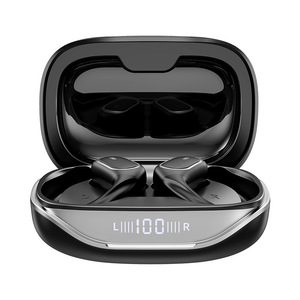
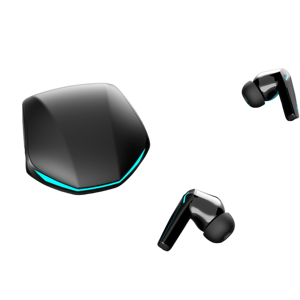
High-demand smartwatches, hybrid earbud combos, and health tracking wearables engineered for international distributors, wholesalers, and brand owners.
The global market for children’s smart wearables has undergone a structural transformation. What was once considered a novelty toy has rapidly evolved into an essential, high-precision safety, communication, and health monitoring tool for parents worldwide. As the epicenter of global consumer electronics manufacturing, China—specifically the Shenzhen and Dongguan industrial clusters—produces over 85% of the world's children's smartwatches. However, for international procurement directors, OEM brands, and consumer electronics importers, identifying the **best kids smart watch manufacturers and suppliers in China** requires a deep understanding of RF hardware design, multi-constellation GNSS positioning accuracy, cellular band compatibility (4G LTE/5G eSIM), and stringent child-safety regulatory compliance.
China’s leading manufacturers offer unprecedented supply chain integration, combining SMT (Surface Mount Technology) assembly, high-precision antenna tuning, acoustic enclosure optimization, and specialized parent-side application development. Brands leveraging Chinese OEM/ODM partnerships can achieve significant time-to-market advantages while maintaining compliance with regional telecom standards, including PTCRB, FCC ID (USA), CE RED (Europe), and TELEC (Japan).
When evaluating suppliers, technical directors must look beyond external aesthetics. A reliable kids smart watch depends on an optimized hardware stack engineered to operate in challenging signal environments while maximizing battery efficiency.
| Hardware Component | Entry-Level Specifications | Mid-Tier OEM Benchmark | Flagship B2B Standard |
|---|---|---|---|
| Processor / SoC | Single-Core MCU (208 MHz) | UNISOC 8521E / MTK6739 Dual-Core | Qualcomm Snapdragon Wear / UNISOC 8541E Quad-Core |
| Cellular Network | 2G GSM (850/900/1800/1900 MHz) | 4G LTE Cat-1 (Global Bands B1/B3/B7/B8/B20) | 4G LTE Cat-4 + eSIM Support / Global Roaming |
| Positioning Tech | LBS (Cell Tower Triangulation) | GPS + LBS + Wi-Fi Positioning | Multi-GNSS (GPS+GLONASS+BeiDou) + Wi-Fi + AGPS + LBS |
| Display Screen | 1.44" TN Color Screen (128x128) | 1.4" TFT Full Touch (240x240) | 1.85" HD AMOLED / Curved 2.5D Tempered Glass |
| Waterproof Rating | IP65 (Splash Resistant) | IP67 (1 Meter Submersion 30 Mins) | IP68 / 5ATM Professional Swimming Grade |
| Battery & Thermal | 400 mAh Li-Polymer (Standard PCB) | 650 mAh Safe Polymer + Seiko Protection IC | 900 mAh High-Density Cobalt Battery + Thermal Cutoff |
Engineered for real-world usage, top-tier factories utilize custom antenna structures (LDS - Laser Direct Structuring) to optimize 4G signal gain while keeping SAR values well below the stringent EU threshold of 2.0 W/kg for head exposure and 4.0 W/kg for limb exposure.
Procurement managers must stay ahead of technological transitions. The next 3 to 5 years will bring major innovations in how parents interact with children's safety devices, driven by hardware miniaturization, AI integration, and evolving data security legislation.
With telecommunication carriers worldwide decommissioning 2G and 3G networks, bulk buyers must shift 100% of procurement to 4G LTE Cat-1 and Cat-4 platforms. Furthermore, embedded SIM (eSIM) technology is quickly replacing plastic Nano-SIM slots, eliminating water ingress points and enabling over-the-air carrier provisioning.
Static geofencing is being replaced by machine learning algorithms embedded directly into the watch firmware or cloud server. Future devices predict familiar safe zones (school, home, sports centers) and automatically trigger parent alerts if abnormal movement speed or atypical path deviations are detected.
Modern parents demand accurate health monitoring. Advanced OEM models now integrate optical photoplethysmography (PPG) sensors optimized for young skin tones to track continuous heart rate, blood oxygen (SpO2), stress indexes, skin temperature, and sleep hygiene without intrusive wearables.
Data security is a make-or-break compliance factor. Leading Chinese suppliers are partnering with AWS and Microsoft Azure data centers located within the EU and North America, utilizing AES-256 end-to-end encryption for voice communications, real-time tracking streams, and remote camera previews.
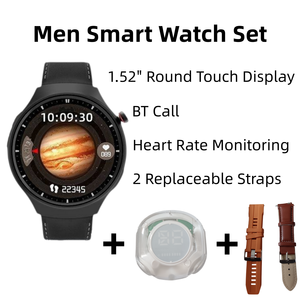
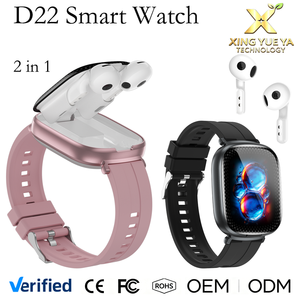
Innovations like 2-in-1 Smart Watch + TWS Earbuds (as seen in our featured lineup) reflect growing consumer demand for versatile devices. These hybrid units allow children to manage audio learning, virtual classes, and communication seamlessly within a single integrated, re-chargeable ecosystem.
Building a market-leading smart wearable brand demands more than standard off-the-shelf purchasing. It requires an agile manufacturing partner equipped with full-stack research & development capabilities, vertically integrated supply chains, and rigorous quality assurance protocols.
Our engineering teams handle every stage of product design: from schematic capture and 8-layer PCB layout to RF antenna design, custom MCU microcode development, and parent-app (iOS & Android) API integration. We offer comprehensive turn-key ODM development tailored to your brand’s specific market positioning.
Equipped with state-of-the-art Anechoic Chambers, Agilent Network Analyzers, and Audio Precision (AP) test systems, we guarantee high speech intelligibility even in noisy environments via Noise Cancellation (ENC/CVC) algorithms, alongside bulletproof RF cellular reception across global bands.
Every production batch undergoes 100% automated optical inspection (AOI), water pressure immersion testing (IP67/IP68 validation), drop testing (1.5 meters onto hard surface), thermal shock cycling (-20°C to 65°C), and button/screen durability cycling before leaving the facility.
We streamline export complexities. All products carry valid CE, FCC, RoHS, REACH, and UN38.3 (battery safety transport) certification dossiers. We provide global DDP/FOB logistics services, custom retail packaging design, and localized after-sales warranty framework support.
To maintain transparent execution and eliminate miscommunication during bulk manufacturing, our factory operates under a standardized 6-phase B2B procurement protocol:
| Phase | Stage Name | Key Deliverables & Milestones | Lead Time |
|---|---|---|---|
| Phase 1 | Requirements & Architecture | Target market band selection, ID industrial design renderings, feature definition, target target price agreement. | 3 - 5 Days |
| Phase 2 | Prototyping & Tooling | 3D structural mockups, CNC sample build, PCB layout freezing, preliminary RF & SAR evaluation. | 14 - 21 Days |
| Phase 3 | Golden Sample Sign-Off | Functional prototype delivery, custom GUI & firmware flashing, client sign-off on color finish and packaging artwork. | 7 - 10 Days |
| Phase 4 | Pilot Production (Trial Run) | 500-unit trial SMT run, tooling adjustments, yield rate stabilization, regulatory lab testing submission (CE/FCC). | 10 - 14 Days |
| Phase 5 | Mass Manufacturing | Full-scale SMT assembly, automated testing, IP67 waterproof chamber testing, 24-hour battery burn-in aging. | 20 - 25 Days |
| Phase 6 | QA Inspection & Shipping | AQL 1.0/2.5 final inspection report, customs documentation approval, ocean/air freight booking and dispatch. | 3 - 5 Days |
Detailed answers addressing common procurement questions regarding MOQs, certification standards, custom app integration, and quality control.
Connect directly with our engineering and export team. Request OEM samples, complete product catalog datasheets, and factory-direct price quotes today.