Worldwide Free Shipping — including India & Egypt100% Genuine Original Tranya Products
0%

Choosing the 2026 best Open Ear Sports Headphones requires more than comparing battery claims. Comfort, stability, sound leakage, call quality, and outdoor awareness all matter during real training. A secure fit should survive sprint intervals, wet pavement, and repeated head movement. Marketing rarely shows those moments.

Industry data supports the category’s growing relevance. The Bluetooth SIG 2024 Market Update forecasts more than 5 billion Bluetooth device shipments annually, with audio remaining a major application. Grand View Research also identifies wireless listening and fitness use as important forces in the broader headphones market. These figures do not prove that every open-ear model performs well. They show why careful testing is necessary.

Our 2026 comparison will examine Open Ear Sports Headphones through practical and technical criteria. We will assess comfort after long runs, control accuracy with sweaty fingers, microphone clarity near traffic, and battery performance at realistic volume levels. We will also check published IP ratings instead of treating “sports-ready” as proof of water resistance. Small details matter. Glasses can change pressure points. Wind can weaken voice calls. Loose hair may affect stability.

No ranking is perfect. Even controlled tests cannot reproduce every ear shape, climate, or training style. That limitation deserves attention. The strongest recommendations will combine manufacturer specifications, recognized testing principles, user experience, and transparent comparisons. Readers should expect trade-offs, not miracle products, as open-ear design continues to mature in 2026.
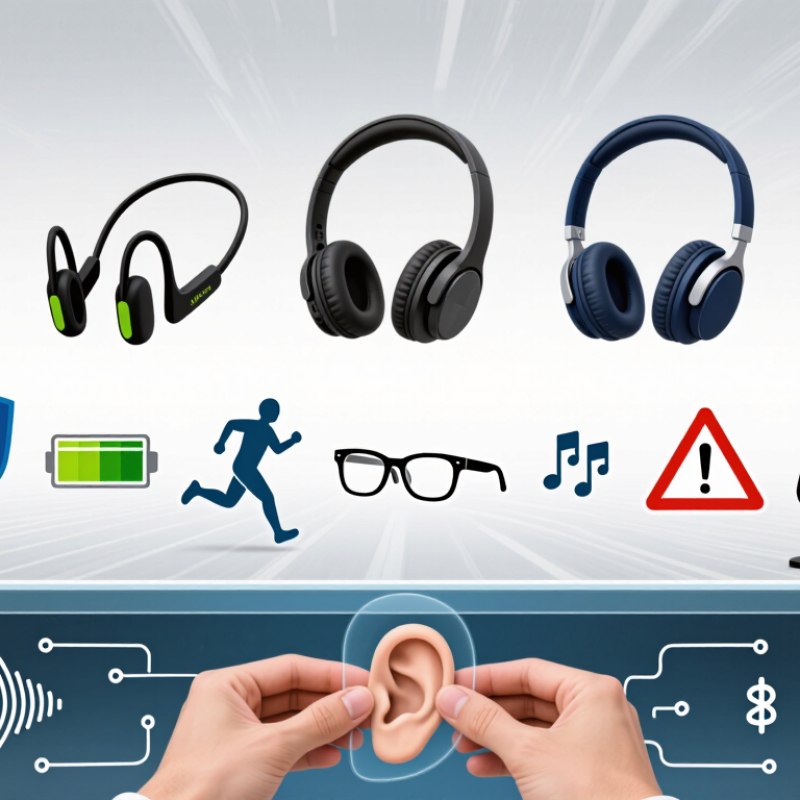
What Are the 2026 Best Open Ear Sports Headphones?

What Defines Open Ear Sports Headphones in 2026

What Defines Open Ear Sports Headphones in 2026

In 2026, open ear sports headphones are defined by awareness, stability, and practical comfort. They rest near the ears instead of sealing the ear canals. This design lets runners hear traffic, footsteps, and nearby conversations while exercising. That awareness matters during outdoor training. It is not merely a lifestyle feature.

A secure fit is equally important. Headphones should remain stable during sudden turns, jumps, and uneven road sections. Lightweight frames reduce pressure behind the ears. Soft contact points also help during longer sessions. Sweat and light rain protection are now expected for regular sports use. However, resistance ratings need careful reading. They do not guarantee protection in every condition.

Sound quality has also changed. Good open ear headphones should deliver clear vocals, defined rhythm, and enough low-end energy without blocking environmental sounds. Users should expect a different experience from sealed earbuds. Battery life, physical controls, and reliable call microphones support daily training. Voice commands can help, but they may fail near heavy traffic. In practical testing, fit often affects sound more than specifications suggest. Ear shape, glasses, and head movement all matter. A product may feel excellent in a store, then loosen after forty minutes outside. That small inconvenience deserves honest attention before purchase.

What Defines Open-Ear Sports Headphones in 2026?

Water resistance remains a key benchmark for sports use. This chart shows the IEC 60529 water-ingress rating levels commonly used to describe protection against splashes, water jets, and temporary immersion. A higher rating does not automatically indicate better sound, comfort, or durability.

IPX4: protection from water splashes. IPX5: protection from water jets. IPX7: temporary immersion in water up to 1 metre for 30 minutes. IPX8: continuous immersion conditions specified by the manufacturer and agreed with the testing facility.

How Open Ear Audio Technology Supports Active Movement

Open-ear sports headphones are designed for movement, not isolation. Their speakers sit beside the ear, sending sound toward the cheekbone while leaving the ear canal uncovered. This design can help runners hear traffic, footsteps, and a training partner. The World Health Organization’s Global Status Report on Physical Activity 2022 found that 31% of adults worldwide were insufficiently active. Safer, more comfortable audio may remove one small barrier to daily exercise.

Fit matters during motion. A stable ear hook or lightweight frame can reduce pressure while running, cycling, or lifting. Many 2026 models should also manage sweat, wind, and sudden head movement. Bluetooth SIG’s 2024 Market Update forecasts 5.4 billion Bluetooth devices shipped annually by 2028, showing how widely wireless audio may support active routines. Still, that number does not prove better performance. Marketing often moves faster than testing.

Open ears do not mean risk-free listening. NIOSH recommends limiting exposure to 85 decibels over eight hours, with shorter limits at louder levels. Open-ear sound can also become difficult to hear beside buses or strong wind, encouraging unsafe volume increases. I have found that a moderate setting works indoors, but outdoor conditions are less predictable. That weakness matters. The best sports headphones should combine secure movement, clear speech, reliable controls, and responsible volume guidance rather than simply sounding louder.

What Are the 2026 Best Open Ear Sports Headphones? – How Open Ear Audio Technology Supports Active Movement

A brand-neutral comparison of the leading open-ear sports headphone designs, focusing on situational awareness, movement stability, comfort, durability, and practical battery performance.

Open-Ear Design Best For Typical Weight Typical Battery Life Water Resistance Movement Stability Situational Awareness Key Advantages and Limitations
Open-Ear Ear-Hook Headphones Running, road cycling, gym training, and everyday outdoor exercise Approximately 25–35 g per pair Approximately 7–12 hours; charging cases may extend total use to 24–48 hours Usually IP55–IPX5; suitable for sweat and light rain when correctly rated Excellent Excellent Hooks distribute pressure around the ears and reduce movement during vigorous activity. They generally offer stronger bass than bone-conduction designs, but wind noise can affect outdoor listening.
Open-Ear Clip-On Headphones Walking, commuting, office use, and moderate workouts Approximately 8–15 g per side Approximately 6–10 hours; charging cases commonly provide multiple additional charges Often IPX4–IPX5; protection varies considerably by model Very good Excellent Lightweight and comfortable because the ear canal remains uncovered. Clip pressure and fit can vary between users, and loud environments may reduce perceived volume.
Bone-Conduction Headphones Road running, trail running, cycling, and activities requiring maximum environmental awareness Approximately 25–35 g Approximately 8–12 hours Commonly IP55–IP68; higher ratings may allow use in heavy rain or brief water exposure Excellent Outstanding Sound reaches the inner ear through vibration, leaving the ear canals open. They are highly effective for awareness, but usually provide less low-frequency impact and can transmit vibration through the cheek area.
Open-Ear Neckband Headphones Long training sessions, hiking, travel, and users who prefer a secure physical connection Approximately 25–45 g Approximately 10–16 hours Commonly IPX4–IPX5 Very good Very good The neckband reduces the risk of losing an earpiece and supports long listening sessions. It can feel less discreet and may interfere with collars, helmets, or high-back clothing.
Open-Ear Sports Earbuds with Directional Speakers Mixed training, strength workouts, indoor cycling, and users wanting a more earbud-like experience Approximately 15–25 g per pair Approximately 6–10 hours; charging cases commonly increase total listening time to 24–40 hours Usually IPX4–IPX5; the charging case is often less water-resistant Very good Very good Directional audio can improve clarity while keeping the ear canal open. Fit depends on ear shape, and leakage may be noticeable to people nearby at high volume.
Open-Ear Headphones with Adaptive Volume Users moving between quiet indoor areas and noisy outdoor environments Approximately 20–35 g per pair Approximately 6–12 hours, depending on sensor use and volume level Typically IP55 or higher Very good Very good Automatic volume adjustment can improve speech and music audibility when ambient noise changes. Sensors may increase power consumption, and adaptive features should not replace safe listening habits.
Selection guidance: For maximum environmental awareness, bone-conduction designs are usually the strongest choice. For a balance of sound quality, secure fit, and outdoor awareness, open-ear ear-hook headphones are generally the most versatile. Actual battery life, comfort, sound leakage, and water resistance depend on the specific product, operating volume, fit, temperature, and usage conditions. IP ratings indicate laboratory-tested protection and do not guarantee protection against every form of water exposure.

Which Features Matter for Comfort, Safety, and Sound Quality

The best open ear sports headphones in 2026 should balance comfort, safety, and sound quality.

Comfort begins with gentle contact, not maximum clamping force. During a run, pressure around the temples becomes noticeable within minutes. A stable ear hook helps, but excessive tension can cause soreness. Lightweight materials also matter, especially during longer training sessions.

Safety depends on awareness. The World Health Organization’s 2021 World Report on Hearing says more than 1.5 billion people live with hearing loss worldwide. Open ear designs help runners hear traffic, cyclists, and nearby voices. They do not make loud listening harmless. NIOSH recommends limiting exposure to 85 dBA over eight hours, with exposure time halving for every 3 dB increase. Keep the volume moderate. Real roads are noisy.

Sound quality needs a practical test. Voices should remain clear, bass should feel controlled, and music should not disappear under wind noise. Directional audio can improve privacy, but poor tuning may create a thin, distant sound.

Sweat resistance should be checked against the IEC 60529 rating, not vague marketing language. Fit varies between ears. That weakness matters. A headphone can measure well in a laboratory yet slip during intervals, reducing both clarity and safety. Touch controls also need reliable response when fingers are wet. Small details count.

How to Compare the Best 2026 Open Ear Sports Headphones

Comparing the best 2026 open ear sports headphones begins with your training routine, not the price. During a six-kilometre run, I would check whether the ear hooks stay stable during turns and sudden stops. Fit matters more than advertised comfort. The speaker should sit near the ear canal without pressing against it. Voices, traffic, and warning signals should remain noticeable, especially near busy roads. However, wind can cover quiet podcasts, and that limitation deserves honest attention.

Sound quality needs practical testing. Play spoken audio, acoustic music, and bass-heavy tracks at moderate volume. Compare vocal clarity, bass control, and sound leakage in a quiet room. Open ear designs usually sacrifice some deep bass for awareness. That is not automatically a weakness. It depends on your training goals. Check the published water-resistance rating, charging method, control response, and battery life at realistic volume levels. Marketing figures can mislead.

Calls reveal another difference. Test the microphones beside a road, inside a gym, and under light wind. Ask another person whether your voice sounds distant or compressed. I would also compare latency during workout videos and navigation prompts. My early mistake was judging headphones after ten minutes indoors. Longer sessions exposed pressure points and slipping. Comfort can change with sweat. Personal testing remains essential, even when specifications appear impressive.

Which Users and Sports Benefit Most from Each Design

What Are the 2026 Best Open Ear Sports Headphones?

The best open-ear design depends on where you train and how much awareness you need. Road runners and urban cyclists often benefit from bone-conduction headphones. They leave the ear canals open, allowing traffic, bells, and nearby voices to remain noticeable. They usually feel secure under a cap, but music may sound thinner, especially during windy rides. Some users also notice pressure around the cheekbones after long sessions. That detail is easy to overlook.

Air-conduction ear-clip models suit gym workouts, walking, and moderate trail runs. Their sound often feels fuller than bone conduction, which helps during interval training or strength sessions. The ear clips should stay stable during jumping without squeezing the ears. However, heavy wind can reduce clarity, and loud music may still distract you from other people. Keep the volume conservative near roads and shared paths.

Neckband designs can work well for hikers and cyclists who want longer battery life and fewer loose parts. They usually feel balanced, but some collars may catch the band during stretching or floor exercises. Small clip-on models are lighter and practical for short workouts, although their fit can change with sweat. Check the published water-resistance rating instead of assuming every open-ear model handles rain. I would test each design with a ten-minute walk, quick head turns, and a short sprint. Comfort often changes after real movement.

FAQS

What defines open-ear sports headphones in 2026?

They rest near the ears without sealing the ear canals. This keeps traffic, footsteps, and nearby voices audible during outdoor training. Awareness matters.

Why is fit important during sports?

A secure fit should survive turns, jumps, and uneven paths. Lightweight frames reduce pressure behind the ears. Sweat can change the fit.

How should I test sound quality?

Try spoken audio, acoustic music, and bass-heavy tracks. Check vocals, rhythm, bass control, and sound leakage at moderate volume. Deep bass may feel limited.

Which design suits road runners and urban cyclists?

Bone-conduction designs keep the ear canals open. They can make bells, vehicles, and voices easier to notice. Wind may make music sound thinner.

Who may prefer air-conduction ear-clip models?

They suit gym workouts, walking, and moderate trail runs. Their sound often feels fuller during intervals. Check whether the clips squeeze your ears.

Are neckband designs useful for hiking and cycling?

They can offer longer battery life and fewer loose parts. However, the band may catch on clothing during stretching or floor exercises. Small details matter.

What features should I check before buying?

Check water-resistance ratings, charging methods, physical controls, microphone quality, and realistic battery life. Published figures can mislead. Test the controls while moving.

Can indoor testing predict outdoor comfort?

Not completely. I once judged headphones after ten quiet minutes indoors. After forty minutes outside, pressure and slipping became obvious. Real movement tells more.

Conclusion

In 2026, Open Ear Sports Headphones are designed to deliver clear audio without completely blocking the ears, helping users stay aware of traffic, training partners, and surrounding sounds. Their lightweight, secure designs support active movement across running, cycling, hiking, gym workouts, and everyday exercise. Modern open-ear audio technology focuses on directional sound, stable fit, efficient battery use, and improved resistance to sweat and changing weather conditions.

When comparing the best Open Ear Sports Headphones, users should consider comfort during long sessions, movement stability, sound clarity, call performance, battery life, durability, and ease of control. Safety awareness is especially important for outdoor activities, while strong bass and immersive listening may matter more during indoor training. Different designs suit different needs: flexible ear hooks can benefit runners, low-profile frames may suit cyclists, and comfortable, durable models can support extended workouts or daily active use.


Evelyn

Evelyn

Evelyn is a dedicated marketing professional with a strong understanding of the company’s products, customers, and evolving market needs. Through a combination of industry knowledge, thoughtful communication, and practical experience, she creates clear and valuable content that helps readers make......