China has become a major manufacturing base for high-quality audio products. Its experienced suppliers produce Active Noise Canceling Earbuds for global brands and emerging businesses. Their capabilities cover acoustic design, wireless connectivity, battery integration, and compact product assembly. However, factory scale alone does not prove product reliability.
This guide examines China’s leading manufacturers through practical, evidence-based criteria. These criteria include engineering experience, production capacity, noise-control performance, and quality management. A serious supplier should explain its microphone layout, chipset selection, and acoustic tuning process. It should also provide clear test results for battery life, call quality, latency, and wind resistance. Small details matter. A stable hinge, clean charging contacts, and balanced ear tips can shape daily comfort.
Independent verification remains important. Buyers should review factory audits, product samples, certification records, and customer references before making decisions. Hands-on testing can reveal problems that brochures often hide. For example, noise cancellation may perform well in a quiet office but weaken beside a busy road. Firmware updates can also change the listening experience after purchase. No manufacturer is perfect, and some impressive specifications may require closer questioning. That is worth remembering. By comparing technical evidence with real user feedback, businesses can identify capable partners and reduce avoidable sourcing risks. This introduction provides a practical starting point for evaluating China’s top Active Noise Canceling Earbuds manufacturers with greater confidence.
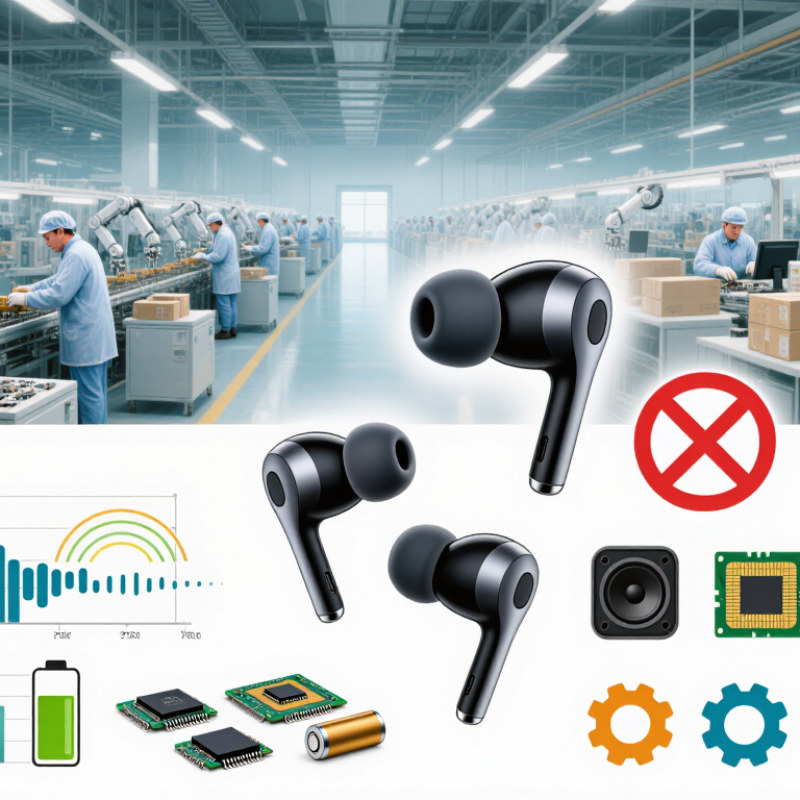
Active noise canceling earbuds use microphones to detect surrounding sound and electronics to create an opposing signal. This reduces some incoming noise before it reaches the listener. The effect is usually strongest against steady, low-frequency sounds, such as an aircraft cabin hum or air conditioner. Sudden voices and sharp claps are harder to remove. Fit matters, too: a loose seal can weaken isolation, even when the electronics work well.
They have a practical role in travel, shared offices, and other noisy settings. By lowering background noise, they may make listening more comfortable without requiring the user to raise playback volume as much. Still, ANC is not hearing protection. The WHO-ITU safe-listening standard recommends no more than 80 decibels for up to 40 hours per week for adults. Risk depends on both level and duration. Quiet is useful.
For manufacturers in China, this definition points to more than microphone counts or advertised cancellation claims. Testing should cover different frequencies, ear shapes, and real-world fit. Users may also need to hear announcements or nearby traffic, so awareness modes and easy controls matter. One limitation is often overlooked: noise reduction varies by person and environment. The label alone cannot promise the same result for every ear.
Active noise cancellation is most effective against steady, low-frequency sounds such as aircraft engines, road noise, and air-conditioning systems.
The chart presents representative attenuation ranges commonly associated with ANC systems. Performance generally decreases as frequency rises because higher-frequency sounds have shorter wavelengths and are more difficult to counter accurately. Actual results vary with earbud design, fit, seal quality, noise direction, and listening conditions.
China’s active noise canceling earbuds manufacturing landscape combines mature supply chains with fast product iteration. Manufacturers often source drivers, microphones, chipsets, batteries, and charging components within connected industrial clusters. This reduces transport time and supports flexible production schedules. It also helps smaller orders move from prototype to pilot run quickly.
Experienced factories usually offer OEM and ODM services. Their engineering teams tune microphone placement, acoustic chambers, firmware, and ear-tip fit. ANC performance depends on all four elements. Not just the chipset. During production checks, teams may measure noise reduction, call clarity, charging speed, battery endurance, and Bluetooth stability. Samples should be tested in offices, trains, and windy outdoor areas, not only in quiet laboratories.
Quality control remains uneven across the market. No factory gets every batch perfect. That weakness matters. Reliable manufacturers document incoming materials, assembly tolerances, aging tests, and final inspection results. They should explain failure rates instead of hiding behind polished samples. Buyers can request traceable test records and compare multiple production batches. Regulatory documentation, recycling information, and battery safety procedures also deserve careful review. A strong supplier communicates clearly when a design needs revision, even when that delays shipment.
Chinese earbud manufacturers increasingly compete through acoustic engineering, not only low production costs. Their core platform often combines feedforward and feedback ANC. External microphones sample traffic noise, while internal microphones check leakage near the ear canal. A digital signal processor then creates an opposing waveform within milliseconds. Small MEMS microphones matter here. Their spacing, sensitivity, and sealing directly affect cancellation accuracy.
Adaptive ANC is now common in higher-grade designs. Algorithms adjust filter strength when users enter a train, office, or windy street. Bluetooth SIG’s 2024 Market Update forecasts nearly 2.8 billion annual Bluetooth audio streaming devices by 2028. This growth encourages investment in Bluetooth Low Energy Audio and the LC3 codec. These technologies can improve power efficiency and maintain stable voice transmission. However, lower latency does not automatically mean better sound. Tuning still requires trained engineers and repeated listening tests.
In Chinese production facilities, engineers typically combine ear-canal simulation, microphone calibration, and real-world noise recordings. A train-door slam and a steady air-conditioner hum need different filters. Acoustic chambers expose problems before mass production. Battery tests also measure ANC runtime at controlled volume levels. Poor sealing remains a weakness. Wind noise is especially difficult, and aggressive filtering may create pressure or hiss. No algorithm removes every sound. Counterpoint Research has repeatedly identified strong growth in true wireless shipments, but shipment volume can hide uneven quality. Some designs still need better long-term comfort testing and more transparent measurement data.
Evaluating an ANC earbud manufacturer requires more than comparing quoted prices. Request factory photos, production records, and a clear explanation of their testing process. A reliable supplier should explain microphone placement, noise-reduction targets, and tuning limits. Ask for samples from different production batches. One sample proves very little. Listen inside a quiet room, beside a running fan, and near steady traffic noise. Check whether voices sound natural when ANC is active. Review battery results at a stated volume level and codec setting.
Factory capability matters as much as acoustic performance. Confirm whether the company controls acoustic design, assembly, firmware, and final inspection. Ask to see calibration equipment, aging-test records, and waterproofing procedures. Independent laboratory reports can support claims about safety and electromagnetic performance. Verify that reports match the exact model, battery, and charging case. Small differences matter. Production capacity should include realistic monthly output, defect rates, and replacement procedures.
Communication reveals practical experience. Does the engineering team answer technical questions with measurements, or only marketing language? Request a written sample approval process and change-control policy. During one evaluation, I would not ignore uneven ear-tip fit; it can make ANC results appear better or worse. I would also question unusually perfect test data. Real products show variation. A transparent manufacturer discusses those limits and explains how inspection reduces them. That honesty is often more valuable than a polished factory presentation.
China Top Active Noise Canceling Earbuds Manufacturers
China-based manufacturers often support OEM and ODM projects, but the two models serve different needs. With OEM, a buyer provides product specifications, branding, and design direction. The factory then handles production and may advise on manufacturability. ODM is more collaborative: a supplier offers an existing platform that can be adapted with selected features, materials, or appearance.
Customization can cover earbud shape, case finish, packaging, controls, microphones, and noise-canceling performance. Ask how the team tunes ANC for steady low-frequency sounds, such as a ventilation fan, and how it checks performance during calls. Request samples before approving a large production run. Fit, microphone pickup, and touch controls are easier to judge in person. Small details matter.
A clear specification sheet helps prevent avoidable revisions. Include target battery life, charging requirements, Bluetooth version, materials, and inspection criteria. Ask for test records and confirm which checks apply to every unit versus sample batches. Not every requested feature fits every budget or housing design. That can be frustrating. Even so, a supplier that explains trade-offs plainly is often more useful than one that promises everything. Keep time for sample feedback; real-world testing may reveal issues that a factory bench test misses.
| Evaluation Dimension | What Buyers Can Assess | OEM Considerations | ODM Considerations | Customization Options |
|---|---|---|---|---|
| Active Noise Cancellation (ANC) | ANC architecture, operating modes, performance across different noise environments, and transparency mode behavior. | Confirm whether the supplier can manufacture to a buyer-provided acoustic specification and maintain consistent tuning. | Ask what ANC designs and acoustic platforms are already available for adaptation. | ANC mode names, control behavior, transparency settings, and acoustic tuning may be configurable, subject to the platform. |
| Acoustic Performance | Frequency response, driver type and size, microphone performance, call clarity, and listening-test results. | Provide target specifications and review samples before approving production. | Compare existing sound profiles and determine whether the acoustic design can be adjusted. | Possible options include sound signature, equalization presets, driver selection, and microphone tuning. |
| Bluetooth and Audio Features | Bluetooth version, supported codecs, multipoint support, latency behavior, and compatibility with target devices. | Verify the exact chipset configuration and feature support for the required markets and devices. | Check which features are already supported by the proposed reference design. | Feature selection depends on chipset, firmware, licensing, and product configuration. |
| Battery and Charging | Earbud and case capacity, playback time, charging time, USB charging, and wireless charging availability. | Validate battery specifications and runtime under clearly defined test conditions. | Review available battery and charging configurations for the selected platform. | Case capacity, charging interface, indicator behavior, and wireless charging may be selectable. |
| Industrial Design and Materials | Fit, weight, housing materials, finish, button or touch controls, and case construction. | Supply approved drawings, material requirements, colors, and surface-finish specifications. | Choose an existing design for adaptation or request design changes within tooling constraints. | Common choices include color, texture, logo placement, packaging, and selected housing details. |
| Water and Dust Protection | Documented ingress-protection rating and whether the rating applies to earbuds, charging case, or both. | Request test reports for the exact product configuration and confirm the rating in production requirements. | Check the rating of the base design and the impact of any enclosure changes. | Sealing and enclosure adjustments may affect design, cost, and validation requirements. |
| Firmware and Companion App | Control options, firmware update process, language support, app availability, and data or privacy practices. | Define required software behavior and agree on ownership, maintenance, and update responsibilities. | Determine which functions can be branded or adapted from the existing software platform. | App appearance, control settings, voice prompts, and selected user-facing features may be customizable. |
| Quality Management and Testing | Incoming-material checks, production inspections, functional tests, reliability testing, and defect handling. | Agree on acceptance criteria, inspection plans, sample approval, and corrective-action procedures. | Review existing quality controls and identify additional tests needed for the target market. | Test plans can be aligned with product specifications, applicable regulations, and buyer requirements. |
| Compliance and Market Access | Applicable radio, electrical, battery, chemical, labeling, and product-safety requirements for each destination market. | Clarify which party arranges testing, maintains technical documentation, and bears certification costs. | Check whether existing reports cover the selected configuration and intended sales markets. | Packaging, labels, manuals, and product configuration may need market-specific adaptations. |
| Production and Supply Planning | Sample process, stated production capacity, component lead times, minimum order quantity, and delivery planning. | Confirm the production schedule, order terms, change-control process, and availability of critical components. | Ask whether the selected design is already in production and what changes could affect lead time. | Custom tooling, components, packaging, and software work can change minimum quantities and timelines. |
| Commercial and After-Sales Support | Quotation scope, warranty terms, spare-parts availability, technical support, and defect-resolution process. | Specify responsibilities for tooling, intellectual property, product changes, and warranty claims. | Clarify rights to use or modify the design and the scope of ongoing product support. | Packaging, documentation, warranty handling, and support arrangements can be agreed for each project. |
Specifications, certifications, minimum order quantities, lead times, and customization capabilities vary by supplier and product configuration. Verify current details through technical documentation, representative samples, and written quotations before placing an order.
Built-in microphones detect nearby sound. Electronics create an opposing signal, reducing part of the incoming noise.
ANC works best with steady, low-frequency sounds, such as aircraft hum, air conditioners, and running fans. Sudden voices remain harder.
Yes. A loose ear tip weakens the seal and reduces isolation. Different ears may need different tip sizes.
No. ANC improves comfort but does not replace certified hearing protection. Keep listening levels and exposure time controlled.
One guideline recommends no more than 80 decibels for up to 40 hours weekly. Risk depends on volume and duration.
They can help in aircraft cabins, shared offices, trains, and near steady traffic. Quiet environments can feel less tiring.
Request samples from several production batches. Test them beside a fan, in an office, and near steady outdoor traffic.
Review microphone placement, acoustic design, firmware, assembly, battery tests, and final inspection. The chipset alone proves very little.
Match reports to the exact model, battery, and charging case. Ask for traceable records, defect rates, and stated test conditions.
Be careful with perfect data, vague answers, and polished samples without batch records. Real products show some variation.
This article explores China’s Active Noise Canceling Earbuds industry, beginning with how ANC earbuds reduce unwanted background noise and support clearer listening in everyday settings. It outlines China’s manufacturing landscape, where experienced suppliers bring together product design, component sourcing, engineering, and large-scale production. It also introduces core technologies used in ANC development, including microphone systems, signal processing, acoustic tuning, and integration with wireless audio features.
For businesses evaluating Chinese manufacturers, the article highlights practical considerations such as technical capability, product quality, communication, production capacity, and quality-control processes. It also explains the differences between OEM, ODM, and customized manufacturing options, helping buyers understand how they can adapt designs, features, and packaging to their requirements. Together, these topics provide a useful framework for assessing suppliers and developing ANC earbuds suited to a target market and budget.